Innovation in Motion: Five Years with Apkudo
12.02.2025
George
Krautzel
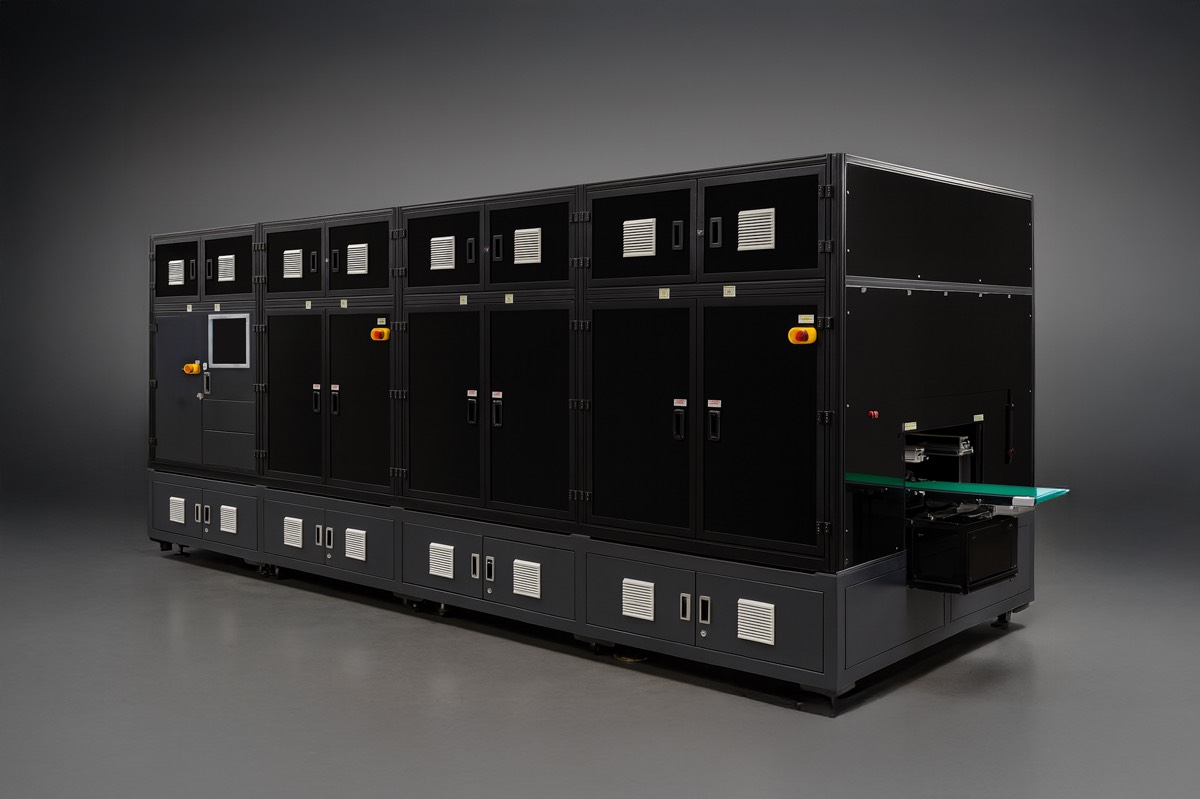
When we invested in Apkudo five years ago, the global device supply chain was straining under the weight of rising return volumes, inconsistent grading standards, and enormous operational inefficiencies. The secondary device market was expanding rapidly, yet the infrastructure powering it looked the same as it had a decade earlier. Processes were manual. Data was fragmented. Robotics were rare. And the result was a system that left billions of dollars of value on the table every year.
Apkudo started with a simple but ambitious idea. Bring software, robotics, and data together in a single workflow to create a reliable, automated, and transparent way to evaluate and move devices through their lifecycle. Treat every phone, tablet, and laptop like an asset with a passport and history rather than a problem to process. Connect the silos that made the industry slow. Build trust through data.
That vision has not only come to fruition, it has accelerated.
Today we look back at Apkudo’s last five years with the same lens we apply to all our investments: where the business was when we invested, how the market shifted, how the team executed, and what the next chapter looks like. Apkudo has become a great example of how innovation successfully compounds when software, robotics, and AI are treated as complementary rather than competing forces.
Then and Now
At the time of our initial investment, Apkudo operated a single integrated platform that combined device testing workflows with robotics and data analytics. It was a differentiated system, but still early. Most of the industry relied on human grading, spreadsheets, and loosely coupled tools. The company was concentrated in North America with a handful of enterprise customers willing to take a bet on a new way to process devices at scale.
Five years later, the picture has changed dramatically.
- Company run rate has grown more than sixfold from the time of our initial investment
- The business now operates across seven countries with a multinational customer base
- The platform has expanded well beyond grading into diagnostics, trade-in, insurance, and warranty optimization, returns automation, circular lifecycle management, and compliance
- The business model continues to strengthen with scale
- Major global device manufacturers have deepened their partnerships with Apkudo and integrating the technology into core trade-in and device processing workflows
- Apkudo SDK embeds device intelligence into partner apps, point of sale systems, and operational workflows.
- The company introduced the Device Passport™, to bring transparency and traceability to device movement across the circular economy
This trajectory reinforces something we see repeatedly at MissionOG. When a platform solves a systemic bottleneck using an integrated approach, the market pulls it forward faster than anticipated.
Why This Market Needed Change
If you talk with teams managing device intake, trade-ins, or reverse logistics, you hear the same challenges.
Too many steps.
Too many exceptions.
Too much capital tied up in processing delays.
Too much reliance on human judgment for decisions that require precision.
The device circular economy requires full-scale modernization. It combines the complexity of manufacturing with the variability of consumer-generated inventory. That creates an enormous opportunity for automation and data intelligence.
Apkudo recognized early that the answer was never robotics or AI alone. Instead, it was the combination of software orchestration, machine intelligence, and robotics working together to make teams faster and more accurate. Josh Matthews, co-founder and CEO of Apkudo, captured this well in a recent interview. He argued that the future is not machines replacing operators but a tight partnership between automation and people. Operators handle judgment-intensive moments while robotics and AI handle speed, repeatability, and data accuracy. The result is a system that is more efficient than either humans or automation could achieve independently.
This philosophy is now visible in every part of Apkudo’s product.
The Platform Takes Shape
Over the last few years, Apkudo evolved from a workflow engine into a full circular-device operating system.
- Robotics now manage a high percentage of high-volume intake and grading, significantly improving throughput, accuracy, and scalability
- AI-powered diagnostics identify device health issues with far greater accuracy and consistency
- Real-time software orchestrates workflows across global processing centers, reducing lag between actions
- Data models power optimal routing decisions to increase resale value and minimize cycle times
- The Device Passport creates a unified chain of custody record that improves buyer trust and regulatory compliance
What stands out is not any single product. It is how the parts reinforce each other. Data from robotics feeds AI models. AI informs workflow instructions. Software routes devices optimally. The passport captures everything along the way.
This is how a once-fragmented industry becomes a coordinated one.
What Comes Next
Several forward-looking indicators suggest Apkudo is entering its next phase.
- Expanding relationships with the world’s largest mobile companies deepen integration at the OEM level
- Their Device AI SDK initiative brings Apkudo inside one of the largest carrier trade-in and diagnostics ecosystems
- Global expansion into seven countries positions the platform as a standard across geographies
- Operating discipline and scale providing desirable unit economics
Most importantly, the underlying market is still early. Trade-in volumes continue to rise. Carriers and OEMs are investing in circularity programs. Buyers demand traceability. Enterprises want faster cash conversion. Regulatory expectations around data integrity are increasing.
This environment favors a platform that can orchestrate the entire device lifecycle with intelligence, automation, and transparency.
Five Years In
Our original blog post in 2020 focused on how we assess and support disruptive innovation. Apkudo remains a case study of that philosophy in action.
It is rare to find a team that clearly identifies inefficiency, builds the right technology foundation to address it, scales globally, and continues to win the trust of the largest players in its market. Five years in, Apkudo is stronger than ever, operating at global scale, and still pushing the frontier of how software, robotics, and AI can transform an entire industry.
We and many in the connected device ecosystem are excited for what comes next.